How to Use the I Ching
Start with the full beginner flow: question, cast, primary hexagram, changing lines, and relating hexagram.
Read guideFree I-Ching Reading Online
Cast with coins or yarrow. The I-Ching answers not with prediction, but with a mirror held to the moment — a reading shaped by changing lines, the relating hexagram, and the forces already in motion.
New to the I-Ching?
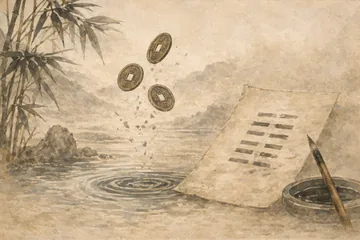
Ask a clear question, cast the coins, then read Meaning first. These short guides explain the flow before you begin.
Recent browser readings
Completed readings are kept in this browser. Reopen the last few, or move the important ones into the member journal.
Search across all 384 line texts, or draw one line at random when you want a smaller, sharper piece of counsel.
Single Line Oracle
Use this to look for a single sentence of counsel, then open the full hexagram for the wider field it belongs to.
Today's Hexagram · Saturday, June 6
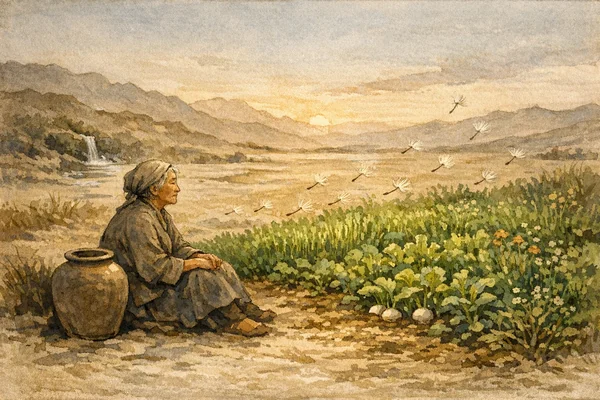
Pure yin. The complement to the Creative: not passivity but devoted, spacious capacity — the soil in which every seed grows.
Reflect: Where in the day does the pattern of the receptive already show itself, and what single act would answer it well?
Prefer this as an email habit? Join the daily-reading list.
Guides
Use these short guides to understand yin and yang, question framing, casting methods, changing lines, trigrams, the relating hexagram, and how to keep a journal of your readings.
Start with the full beginner flow: question, cast, primary hexagram, changing lines, and relating hexagram.
Read guideFrame questions that invite clarity instead of forcing a yes-no answer or a preferred outcome.
Read guideLearn how broken and solid lines express yin and yang, and why that movement sits underneath trigrams, hexagrams, and change.
Read guideLearn what 6, 7, 8, and 9 mean, and how to weight stable lines against changing ones.
Read guideUnderstand what the relating hexagram shows, and why it should be read as direction rather than prediction.
Read guideLearn how to score 6, 7, 8, and 9, cast from the bottom upward, and read the resulting movement correctly.
Read guideSee how yarrow-style casting differs from coins, and why the line probabilities give the reading a different rhythm.
Read guideStudy Heaven, Earth, Thunder, Wind, Water, Fire, Mountain, and Lake as the building blocks of the 64 hexagrams.
Read guideLearn what to record, how to review readings later, and which journaling path fits browser history, the PDF, or membership.
Read guideBrowse all 64 hexagrams in the King Wen sequence. Each figure names a distinct configuration of change, with its own Judgment, Image, trigrams, and six lines.
Showing all 64 hexagrams.
Recent free casts are kept in this browser on this device. For cross-device readings, notes, and export, use the member journal.
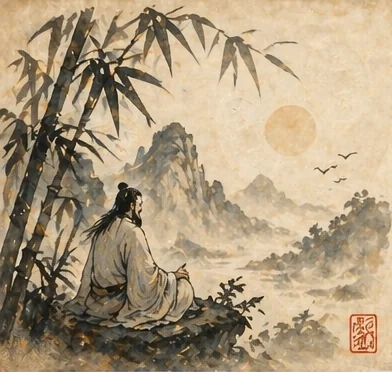
This site is a contemplative digital I-Ching practice. It is not built around prediction. It is built around the older use of the Book of Changes as a mirror for timing, conduct, relationship, and the forces already moving in a situation.
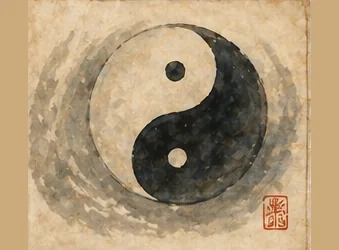 Change
Yin and yang are read as movements rather than fixed labels.
Change
Yin and yang are read as movements rather than fixed labels.
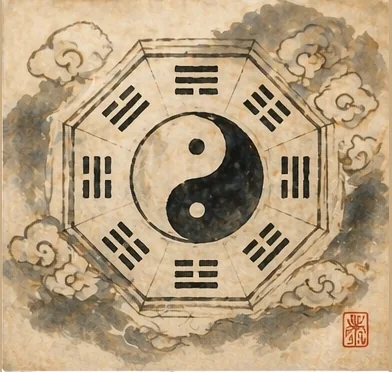 Structure
Trigrams, six lines, and the King Wen order give the oracle its frame.
Structure
Trigrams, six lines, and the King Wen order give the oracle its frame.
 Practice
Stories, images, and daily pages help the answer stay with you.
Practice
Stories, images, and daily pages help the answer stay with you.
The Yìjīng (易經), or Book of Changes, is among the oldest surviving Chinese classics — a divination manual, philosophical text, and cosmological map whose roots trace back more than three thousand years. Its core image is the hexagram, a stack of six lines, each either yin (broken) or yang (solid). Sixty-four such figures describe the archetypal movements of change.
You pose a question, then generate six lines at random — traditionally by tossing three coins or sorting fifty yarrow stalks. Each line may be young (stable) or old (changing). Old lines flip to their opposite, yielding a second hexagram. The oracle's answer lies in the movement between the two and in the specific lines that are transforming.
Begin with the Judgment — a terse verdict on the situation. Then the Image, which translates the figure into a natural metaphor and a lesson for conduct. If any lines are changing, read each one: they describe the specific pressures and choices at play. Finally, the Relating Hexagram (second figure) shows where the situation is tending.
The I-Ching is not fortune-telling. It rewards honest questions and suspicion of easy answers. Read slowly. Read twice. If the text feels opaque, sit with it — the oracle rarely flatters, and its meaning often arrives hours later, sideways, through the door you weren't watching.
Email list
Join for the daily hexagram list, product news, or both. Your manage link arrives by email right away, and the two email types stay separate.