
Method guides
How to Use the I Ching: Coins, Yarrow, and Changing Lines
Use this hub to learn how the oracle is cast, how changing lines and relating hexagrams work, and how the site turns the traditional structure into a practical reflective reading.
From Question to Hexagram
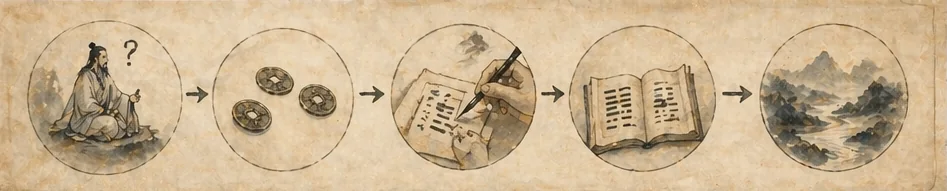
A reading begins with a clear question, then becomes six lines built from the bottom upward. Those lines form the primary hexagram. When old yin or old yang appears, the line changes, and the oracle is read through both the present figure and the movement toward the relating hexagram.
The diagrams below are not substitutes for the text. They are there to make the structure visible at a glance, so the written interpretation has a clearer frame.

Method guides
Read the focused guides
Use these pages when you want one concept at a time instead of the whole method stack at once, from yin and yang and question framing to casting methods, trigram structure, and journaling practice.
How to Use the I Ching
Question, cast, primary hexagram, changing lines, and the relating hexagram in one beginner flow.
Read guideHow to Ask the I Ching
Shape questions that invite clarity instead of forcing prediction or a preferred outcome.
Read guideYin & Yang
See how broken and solid lines become the living grammar behind trigrams, hexagrams, and change.
Read guideChanging Lines Explained
Understand what 6, 7, 8, and 9 mean, and how the active lines should be weighted in a reading.
Read guideRelating Hexagram Guide
See how the relating hexagram shows direction and atmosphere rather than acting as a simple future prediction.
Read guideThree-Coin Method
Learn how the standard three-coin method generates 6, 7, 8, and 9 from six bottom-up throws.
Read guideYarrow Method
Compare yarrow-style casting to coins, including the probability differences that shape the feel of a reading.
Read guideEight Trigrams
Learn the eight three-line images that sit inside every hexagram and make readings easier to remember.
Read guideI Ching Journal
Learn what to record, how to review readings later, and how to use My Readings, the journal PDF, or the member journal well.
Read guideThe Cast at a Glance


Reference
Textual Grounding and Privacy
Textual Grounding
The structure follows the classical Yijing or Book of Changes: sixty-four hexagrams made from six yin or yang lines, traditionally read through the Judgment, Image, and line texts.
The received tradition includes later commentarial layers often grouped as the Ten Wings. This site works from the classical hexagram structure and received reading tradition, while keeping a practical reader-facing focus rather than separating the early Zhou Yi core text from every later layer in detail.
The English interpretations, summaries, and stories on this site are original contemporary reflections. They are intended to clarify the spirit of each hexagram rather than replace classical translations such as Legge, Wilhelm/Baynes, or other scholarly editions.
Privacy
Free readings are not uploaded to a server by the app. If you share a reading, the share link contains the reading data needed to reconstruct it. If you print or save a PDF, that file is yours to keep.
Persistent reading history and reflection notes are account-based member features, so saved material can survive browser changes and device changes when you choose to use membership.
Analytics are used only to understand broad site usage and improve the public app.
Hexagram Order
The directory uses the traditional King Wen sequence. Lines are built and read from bottom to top: the first line is the bottom line, and the sixth line is the top line.
Each hexagram is also read through its lower trigram, the inner condition, and upper trigram, the outer situation.
Three Coins
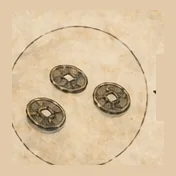
Each line is formed by three virtual coins. Heads counts as 3 and tails as 2. The total creates one of four line types: 6 old yin, 7 young yang, 8 young yin, or 9 old yang.
The random draw uses the browser's cryptographic random number generator when available, with ordinary random numbers only as a fallback.
Yarrow Stalks
The yarrow option simulates the traditional fifty-stalk probability pattern: 6 appears 1/16, 7 appears 5/16, 8 appears 7/16, and 9 appears 3/16.
Compared with coins, yarrow is less symmetrical: old yin/changing yin is less likely than old yang/changing yang, while coin odds give both changing-line types the same chance.
Yarrow stalks are the older divination medium than coins, but the received counting method and its probabilities are historically nuanced. Treat yarrow as a different rhythm rather than a simple claim of authenticity.
Changing Lines
Young lines, 7 and 8, remain stable. Old lines, 6 and 9, are changing lines. Old yin changes into yang; old yang changes into yin.
The primary hexagram shows the present pattern. Changing lines describe the pressure points. The relating hexagram shows the direction the situation tends toward as those lines change.
Daily Hexagram
The daily hexagram is selected deterministically from the calendar date. The date is hashed into one of the 64 hexagrams, so everyone sees the same public reading for that day and the dated archive can reconstruct it later.
It is not a personal cast. Treat it as the general weather of the day; use a coin or yarrow reading when you have a specific question.
Reading Alongside Classical Editions
Use this site for structure
Use the cast view, trigram framing, changing-line logic, and parables to make the movement of the reading easier to see as one whole pattern.
Check a classical translation
For the received wording of the Judgment, Image, and lines, compare with established translations such as Wilhelm/Baynes, Legge, or another serious edition you trust.
Let the texts answer each other
Use this site's commentary as a companion, not a replacement. If a phrase here feels clearer or sharper, bring it back to the classical text and read the two together.
How to Use the Reading
 Question
 Cast
Cast
 Record
 Read
Read
 Respond
- Begin with the question. Ask what the situation is asking of you, not how to force a particular answer.
- Read the primary hexagram. Treat it as the field you are standing in now.
- Read changing lines carefully. They are the most specific part of the answer.
- Read the relating hexagram. It is not simply "the future"; it is the tendency or background direction of the change.
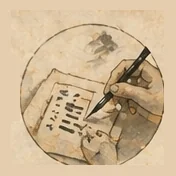
- Write one concrete response. The oracle becomes useful when it changes attention, conduct, or timing.
Companion Tools
If changing lines are where you slow down
The free oracle already shows the structure. These two products are for the next layer: recording the reading well and interpreting movement without guesswork.
Story-led family edition
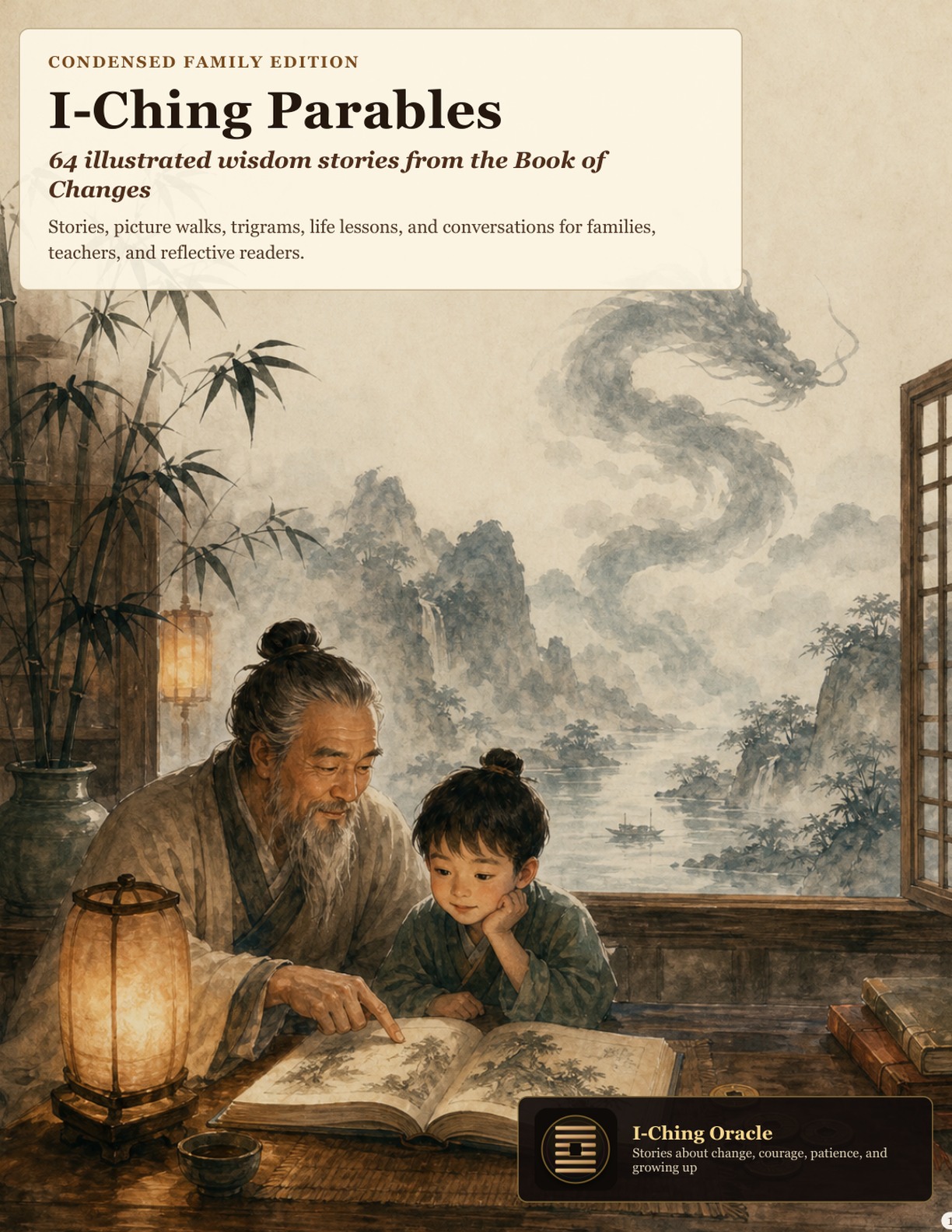
I-Ching Parables
The gentler illustrated family edition for shared reading, symbolic introduction, and discussion before deeper formal study.
Interpret change
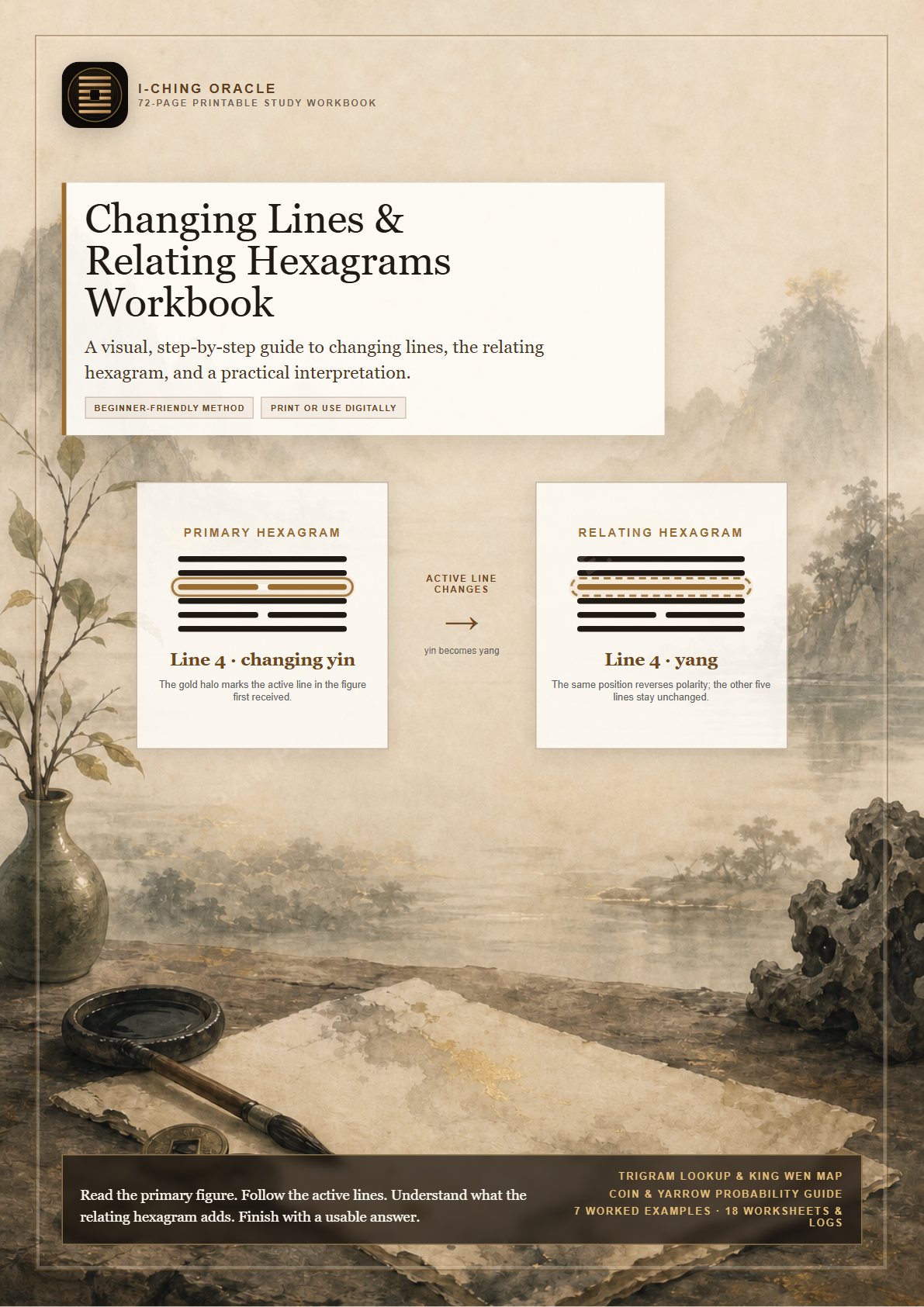
Changing Lines & Relating Hexagrams Workbook
A practical guide for the exact moment when a second hexagram appears and the reading becomes dynamic but unclear.
Record the reading
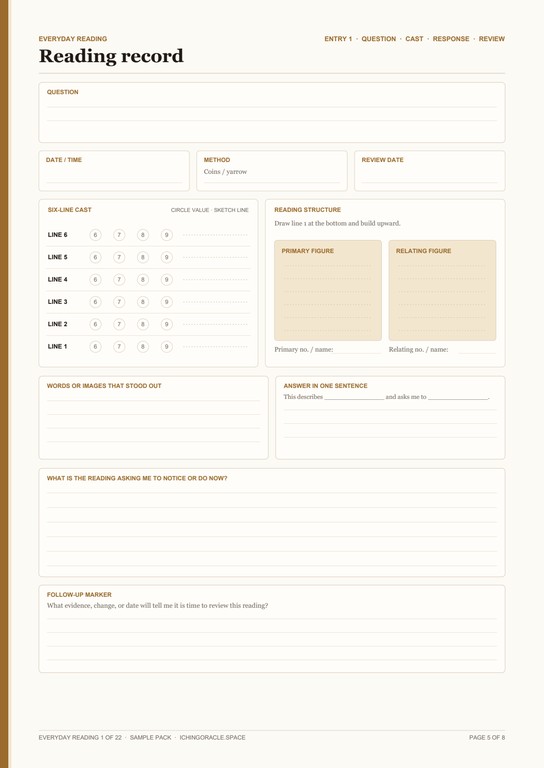
I Ching Reading Journal PDF
A print-first journal for recording the question, cast structure, first interpretation, and later outcome so the reading becomes reviewable over time.
Full illustrated oracle
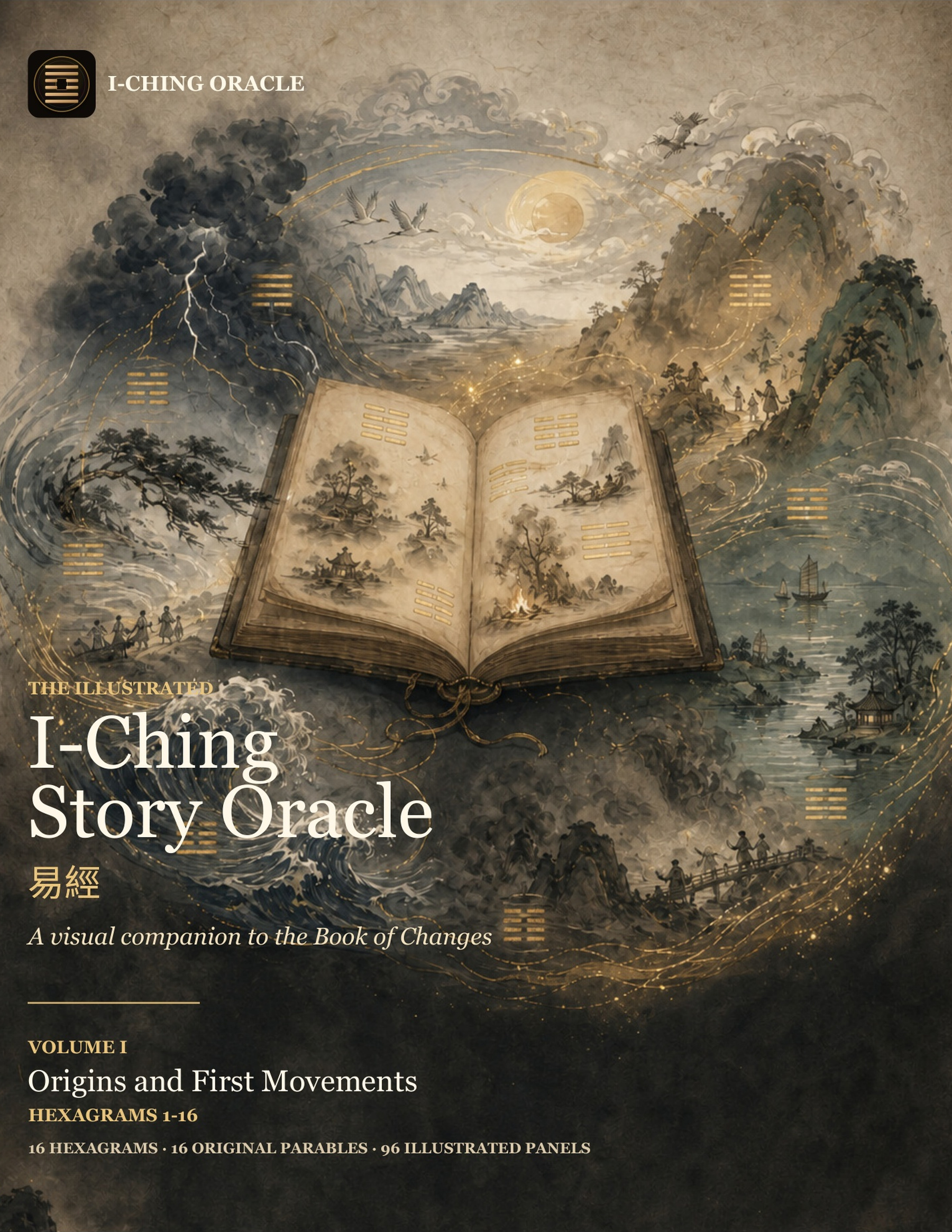
The Illustrated I-Ching Story Oracle
The full-study edition for readers who want the formal oracle text, line voices, original parables, and the illustrated panel sequence in one chapter flow.
Mobile app
Take the oracle with you
Cast with coins or yarrow, read the daily hexagram, browse all 64 hexagrams, and keep private reading notes on your device.

Available now on the App Store and Google Play.