
I-Ching Hexagram 58
兌 The Joyous
Also known as Lake / Open Exchange
Hexagram 58, The Joyous, appears when communication, friendship, and mutual delight are central to the situation. The reading favors open exchange grounded in sincerity, while warning against empty pleasure or seductive flattery.
joy · openness · exchange
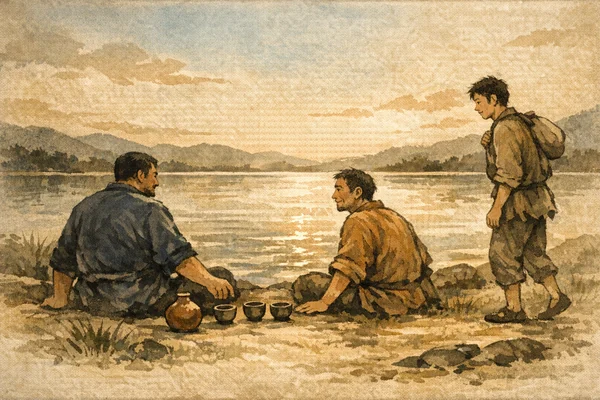 Room For Another
Core Meaning
Judgment and image
The Judgment
Success. Perseverance is furthering.
The Image
Lakes resting one on the other: the image of the joyous. Thus the superior person joins with their friends for discussion and practice.
The Six Lines
This list mirrors the figure from top (Sixth) to bottom (First). For interpretation, read from the bottom line upward. Each line shows a different stage of the hexagram's movement.
Seductive joyousness. Flattery that invites downfall; a bad line disguised as a good one.
Sincerity toward disintegrating influences is dangerous. Genuine warmth toward the wrong company is still dangerous company.
Joyousness that is weighed is not at peace. After ridding oneself of mistakes, one finds joy. Calculated pleasure is not pleasure; let the calculation go.
Coming joyousness. Misfortune. Joy sought from outside rather than grown from within.
Sincere joyousness. Good fortune. Remorse disappears. Pleasure that is honestly come by.
Contented joyousness. Good fortune. Quiet inner pleasure without need for display.
Interpretation and trigrams
Interpretation
Shared joy, free exchange, the open lake reflecting heaven. The figure favours honest communication, friendship, and mutual delight; but it warns against sycophancy and empty pleasure. Real joy strengthens; counterfeit joy weakens.
Trigrams
The Story
Two friends sat by a lake in late afternoon, sharing a flask and speaking of whatever came to them. They did not flatter each other. They disagreed, laughed, fell silent, began again. The lake was calm; the sky was clear. A younger man, passing, wished to join, and they made room. Nothing of consequence was decided. Everything of consequence was felt. That evening each walked home lighter than he had come, though he could not have said why. Shared joy, honestly held, is not frivolous. It is the quiet power that makes all other labors bearable.
Why This Story Fits
The parable is written to make Hexagram 58 visible as lived conduct: Shared joy, free exchange, the open lake reflecting heaven. It echoes the Image's counsel: the superior person joins with their friends for discussion and practice. Lower trigram: Lake. Upper trigram: Lake. Together they set the story's inner and outer weather.
Quick Meaning
What Hexagram 58 means
Hexagram 58 describes joy that is shared openly and honestly. It appears when the quality of exchange matters: conversation, friendship, persuasion, morale, and the way delight moves between people. The reading favors sincere pleasure and real communication, while warning against seductive flattery or joy that empties itself of substance.
- It supports candid exchange, mutual encouragement, and delight that strengthens connection.
- It favors joy rooted in sincerity rather than performance.
- It warns that pleasure sought only from outside becomes dependence, manipulation, or drift.
When this hexagram appears
- The tone of exchange is central. The question may turn less on force and more on how people are speaking, listening, and affecting one another.
- Joy is part of the answer. Hexagram 58 does not treat delight as superficial. Genuine joy can create trust, openness, and shared strength.
- Not all pleasure is sound. The reading distinguishes honest delight from flattery, dependence, or charm used to weaken judgment.
How to apply The Joyous
In relationships
Let communication become more open, warm, and truthful. The reading favors delight that deepens trust, not charm that avoids the real issue or flatters for advantage.
In work or decisions
Use discussion, morale, and open exchange well. This is a good time for collaboration and shared practice, provided the tone stays honest and does not slide into spin or people-pleasing.
In personal growth
Notice what kind of pleasure actually strengthens you. The reading supports joy that is clean, mutual, and life-giving, not indulgence that leaves you thinner afterward.
Use Hexagram 58 in context
Hexagram 58 FAQ
Does The Joyous mean everything is easy?
No. It means open exchange and sincere delight are available as strengths. The hexagram still warns against empty pleasure and flattering influences.
Why does this hexagram connect joy with discussion and practice?
Because real joy here is communal and strengthening. It grows through honest exchange, shared learning, and mutual encouragement rather than solitary indulgence.
What if Hexagram 58 has changing lines?
Changing lines show whether the joy is inwardly content, sincerely shared, anxiously sought from outside, or becoming dangerously seductive.
Mobile app
Take the oracle with you
Cast with coins or yarrow, read the daily hexagram, browse all 64 hexagrams, and keep private reading notes on your device.

Available now on the App Store and Google Play.