
I-Ching Hexagram 40
解 Deliverance
Also known as Release
The storm that breaks the tension. After a long difficulty, release comes.
deliverance · release · resolution
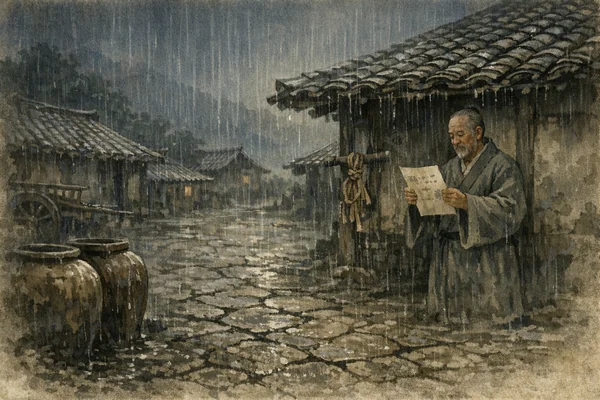 Rain In The Night
Core Meaning
Judgment and image
The Judgment
The south-west furthers. If there is no longer anything where one has to go, return brings good fortune. If there is still something where one has to go, hastening brings good fortune.
The Image
Thunder and rain set in: the image of deliverance. Thus the superior person pardons mistakes and forgives misdeeds.
The Six Lines
This list mirrors the figure from top (Sixth) to bottom (First). For interpretation, read from the bottom line upward. Each line shows a different stage of the hexagram's movement.
The prince shoots at a hawk on a high wall. He kills it. Everything serves to further. One decisive act removes what has long obstructed; all proceeds well.
If only the superior person can deliver themselves, it brings good fortune. Thus they prove to inferior people that they are in earnest. Self-liberation that models it for others.
Deliver yourself from your great toe. Then the companion comes, and in them you can trust. Cut loose from a compromising attachment; real friendship then becomes possible.
If a man carries a burden on his back and nonetheless rides in a carriage, he thereby encourages robbers to draw near. Displaying wealth in a position one has not earned attracts attack.
One kills three foxes in the field and receives a yellow arrow. Perseverance brings good fortune. Rooting out hidden flatterers; reward for straight aim.
Without blame. The rain has fallen; nothing more to say.
Interpretation and trigrams
Interpretation
The storm that breaks the tension. After a long difficulty, release comes. The counsel is quickness where a task remains, completion where it is done, and an amnesty of spirit — do not carry forward the grievances of the bad time.
Trigrams
The Story
After three years of drought, the rain came in the night — not a storm, but a long steady fall that the earth drank as if remembering. In the morning, farmers walked their fields with a strange lightness. The magistrate, who had been harsh during the hard years, issued an amnesty for small offenses. "We have been released," he said. "Let us release each other." The village that carried forward the grievances of the drought did not prosper in the wet years. The one that let the old injuries dissolve with the old dust, did.
Why This Story Fits
The parable is written to make Hexagram 40 visible as lived conduct: The storm that breaks the tension. It echoes the Image's counsel: the superior person pardons mistakes and forgives misdeeds. Lower trigram: Water. Upper trigram: Thunder. Together they set the story's inner and outer weather.
Quick Meaning
What Hexagram 40 means
Hexagram 40 describes deliverance: the tension has broken and the way out is open. It appears after obstruction, danger, or prolonged strain, when what matters is finishing what remains, releasing the old pressure cleanly, and not carrying the bad time forward longer than necessary. The reading favors timely action and emotional amnesty, but it warns against turning release into laziness or reopening what has already been resolved.
- It supports completion, relief, and the quick removal of what still tangles the situation after the main pressure has passed.
- It favors letting go of grievance, ending the crisis cleanly, and moving before the opening closes again.
- It warns against delay, needless revisiting of old conflict, and mistaking release for permission to become careless.
When this hexagram appears
- The crisis has already broken. A knot has loosened, a blockage has shifted, or the worst intensity has passed enough for movement to resume.
- What remains should be finished quickly. Hexagram 40 often appears when a small amount of decisive follow-through will clear what is left of the difficulty.
- Release should be clean. The reading favors leaving the bad time behind rather than extending it with blame, delay, or unnecessary re-litigation.
How to apply Deliverance
In relationships
Let the knot loosen without retying it through blame. The reading favors honest resolution, practical repair, and the grace to stop living inside the old tension once it has truly broken.
In work or decisions
Finish the remaining task and move on. This is a strong time to clear the backlog, remove the last obstacle, and take advantage of the release before hesitation lets new complications gather.
In personal growth
Do not make an identity out of the struggle after the struggle has passed. Hexagram 40 supports release, forgiveness, and the willingness to live beyond the crisis instead of circling it.
Use Hexagram 40 in context
Hexagram 40 FAQ
Does Deliverance mean the problem is completely over?
Not always. It means the constriction has opened enough for release to happen. There may still be cleanup, but the essential condition has shifted in your favor.
Why does the Judgment favor the southwest and returning?
Because deliverance is not about endless forward strain. It often means coming back to level ground, ordinary order, and human community after a period of danger or difficulty.
What if Hexagram 40 has changing lines?
Changing lines show what still needs to be released, whether the relief is timely or premature, and how to avoid letting old entanglements return after the opening appears.
Mobile app
Take the oracle with you
Cast with coins or yarrow, read the daily hexagram, browse all 64 hexagrams, and keep private reading notes on your device.

Available now on the App Store and Google Play.