
I-Ching Hexagram 51
震 The Arousing
Also known as Thunder / Shock
Hexagram 51, The Arousing, appears when something jolts the situation awake. The reading favors steadiness under impact, quick self-ordering, and using the shock to clarify rather than scatter your life.
shock · thunder · arousing
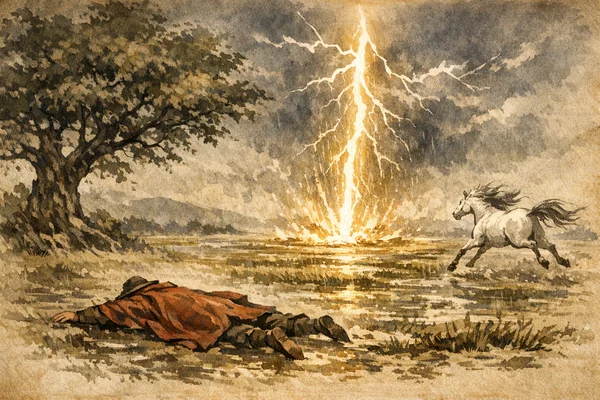 Lightning Beside Him
Core Meaning
Judgment and image
The Judgment
Success. Shock comes — oh, oh! Laughing words — ha, ha! The shock terrifies for a hundred miles, and he does not let fall the sacrificial spoon and chalice.
The Image
Thunder repeated: the image of shock. Thus in fear and trembling the superior person sets their life in order and examines themselves.
The Six Lines
This list mirrors the figure from top (Sixth) to bottom (First). For interpretation, read from the bottom line upward. Each line shows a different stage of the hexagram's movement.
Shock brings ruin and terrified gazing around. Going ahead brings misfortune. If it has not yet touched one's own body but has reached one's neighbour first, there is no blame. One's comrades have something to talk about. If one learns from another's disaster without having to suffer it oneself, no blame; but expect gossip.
Shock goes hither and thither. Danger. However, nothing at all is lost. Yet there are things to be done. Waves of aftershock; nothing lost materially, but tasks multiply.
Shock is mired. Unable to shake off the blow; stuck in stupor.
Shock comes and makes one distraught. If shock spurs to action, one remains free of misfortune. Let the shock be what gets you moving, not what paralyses you.
Shock comes bringing danger. A hundred thousand times you lose your treasures and must climb the nine hills. Do not go in pursuit of them. After seven days you will get them back. Great loss on first impact; do not chase, the dust settles in time.
Shock comes — oh, oh! Then follow laughing words — ha, ha! Good fortune. Fear that gives way to relief and a wiser cheer.
Interpretation and trigrams
Interpretation
A sudden shock that startles the whole landscape. The hexagram teaches that crises, properly met, deepen rather than unseat one: the sage continues the rite even through the thunderclap. Use the shock to examine your life; do not panic, do not drop the cup.
Trigrams
The Story
A traveler sheltering under a tree saw lightning strike the field beside him. The sky cracked open. He fell flat, breathless; his horse bolted. When the thunder passed, he rose, sought the horse, and found it a mile away, shivering but whole. He did not curse the storm. "I was walking as if my life were guaranteed," he said. "The lightning reminded me it is not. I will not forget again." Shock is not punishment. It is the universe tapping the shoulder of the sleepwalker. Whoever receives the tap rightly becomes more awake — and, in the end, more alive.
Why This Story Fits
The parable is written to make Hexagram 51 visible as lived conduct: A sudden shock that startles the whole landscape. It echoes the Image's counsel: in fear and trembling the superior person sets their life in order and examines themselves. Lower trigram: Thunder. Upper trigram: Thunder. Together they set the story's inner and outer weather.
Quick Meaning
What Hexagram 51 means
Hexagram 51 describes shock: the sudden thunderclap that startles the field and exposes what is steady and what is not. It appears when disruption, surprise, or fear shakes the situation awake. The reading favors not panicking, not dropping what truly matters, and using the jolt to put life back in order rather than letting it scatter you.
- It supports steadiness under impact and learning from disruption rather than collapsing into it.
- It favors quick self-examination, renewed order, and action that follows the jolt cleanly.
- It warns against panic, stupefaction, and chasing what was lost before the shock has settled.
When this hexagram appears
- Something has jolted the field awake. The issue may be literal bad news, sudden disruption, exposure, or any event that shakes established assumptions.
- Your response is the real reading. Hexagram 51 often appears less to describe the shock itself than to show what steadiness, order, and character are available under pressure.
- Fear can become instruction. The reading does not deny the impact. It favors letting the shock sober and clarify you rather than letting it unseat what matters most.
How to apply The Arousing
In relationships
Do not answer shock with more shock. The reading favors staying present, keeping hold of what is essential, and letting the jolt reveal where deeper order or honesty is needed.
In work or decisions
Stabilize first, then act. This is a good time to examine what the disruption exposed, restore priorities, and resist frantic motion that only multiplies the damage.
In personal growth
Let the event wake you rather than define you. Hexagram 51 supports using alarm as a summons to reorder life, deepen practice, and become more trustworthy under pressure.
Use Hexagram 51 in context
Hexagram 51 FAQ
Does The Arousing always mean disaster?
No. It means sudden disruption or alarm. The event may be difficult, but the hexagram is equally about the possibility of becoming steadier and clearer through it.
Why does the Judgment emphasize not dropping the spoon and chalice?
Because the true measure of the person is what remains steady under shock. The reading favors staying rooted in what is sacred or essential even while the outer world trembles.
What if Hexagram 51 has changing lines?
Changing lines show where shock becomes relief, where loss should not be chased, where fear must become movement, or where the aftershocks reveal unfinished work that still needs ordering.
Mobile app
Take the oracle with you
Cast with coins or yarrow, read the daily hexagram, browse all 64 hexagrams, and keep private reading notes on your device.

Available now on the App Store and Google Play.