
I-Ching Hexagram 6
訟 Conflict
Also known as Dispute
Hexagram 6, Conflict, appears when sincerity meets obstruction and two forces cannot occupy the same ground without friction. The reading favors restraint, review of beginnings, and refusing to carry the dispute to destructive extremes.
conflict · litigation · dispute
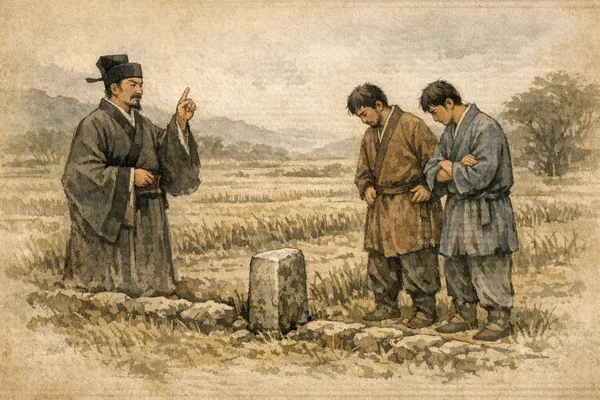 Nine Tenths And Peace
Core Meaning
Judgment and image
The Judgment
You are sincere and are being obstructed. A cautious halt halfway brings good fortune. Going through to the end brings misfortune. It furthers one to see the great person. It does not further one to cross the great water.
The Image
Heaven and water go their opposite ways: the image of conflict. Thus in all transactions the superior person considers the beginning carefully.
The Six Lines
This list mirrors the figure from top (Sixth) to bottom (First). For interpretation, read from the bottom line upward. Each line shows a different stage of the hexagram's movement.
Even if by chance a leather belt is bestowed, by the end of a morning it will have been snatched away three times. Honours won by strife will not hold.
To contend before him brings supreme good fortune. When a true judge hears the case, take it there; in fair court the right is recognised.
One cannot engage in conflict. One turns back and submits to fate, changes one's attitude, and finds peace in perseverance. Fortune. Drop the quarrel with reality; accept and orient anew.
To nourish oneself on ancient virtue induces perseverance. Danger. In the end good fortune. If by chance one is in the service of a king, seek not works. Stand on what has been earned; do not seek new ground.
One cannot engage in conflict; one returns home and gives way. The people of his town, three hundred households, remain free of guilt. To retreat from a superior force is wisdom, not cowardice.
If one does not perpetuate the affair, there is a little gossip. In the end good fortune. Let the small quarrel die; do not feed it.
Interpretation and trigrams
Interpretation
Two forces that cannot share the same ground. The figure counsels that even a just cause is dangerous to push to extremes — compromise early, settle for a partial vindication, consult a wiser head. Prevent conflict by scrutinising beginnings; once in it, do not embark on any great venture.
Trigrams
The Story
Two brothers quarreled over a field their father had left them. Each swore the boundary stone had been moved. They brought the case to the magistrate, who walked the line with them. The stone was where it had always been; each had been remembering a different summer. "Take nine-tenths of what you hoped, and end this," said the magistrate, "or you will both lose the field." The elder agreed. The younger pressed on; in three years he had the field, the debts, and no brother. The man who wins the lawsuit sometimes loses the life the lawsuit was for.
Why This Story Fits
The parable is written to make Hexagram 6 visible as lived conduct: Two forces that cannot share the same ground. It echoes the Image's counsel: in all transactions the superior person considers the beginning carefully. Lower trigram: Water. Upper trigram: Heaven. Together they set the story's inner and outer weather.
Quick Meaning
What Hexagram 6 means
Hexagram 6 describes conflict where sincere intention is obstructed and two forces cannot move forward on the same terms. It does not deny that you may have a case. It warns that even a just case becomes dangerous when pushed too far. The counsel is restraint, early settlement, and clear review of how the conflict began.
- It supports halting before the dispute hardens into a destructive cycle.
- It favors wise counsel, partial settlement, and clarity about the real point at issue.
- It warns against taking the quarrel all the way to the end or starting major new ventures while the conflict still rules the field.
When this hexagram appears
- There is real opposition. The situation is not merely inconvenient or emotionally tense; the underlying principles, interests, or directions are in conflict.
- The beginning matters more than the climax. Hexagram 6 repeatedly points back to origins: unclear agreements, mismatched assumptions, or a bad start that now demands correction.
- Winning is not always the true goal. The reading often asks whether the right outcome is settlement, retreat, or wise redirection rather than final victory.
How to apply Conflict
In relationships
Do not let injury become escalation. Clarify what the real issue is, name the part that can be settled, and avoid feeding the conflict with repeated rounds of accusation or defensiveness.
In work or decisions
Get clear on terms, scope, and evidence. Seek the right mediator or higher-level judgment if needed, but do not launch bigger undertakings from a conflict-ridden field.
In personal growth
Notice where you are fighting reality itself. Sometimes the wisest move is not to press the case harder, but to reorient, let go of the unwinnable point, and preserve your strength for what matters.
Use Hexagram 6 in context
Hexagram 6 FAQ
Does Conflict mean I should never defend myself?
No. It means defense must be proportionate and wise. Hexagram 6 warns against driving the dispute to extremes, not against recognizing that there is a real issue.
Why does the Judgment favor a halt halfway?
Because conflict intensifies by continuation. A partial, timely halt often preserves more truth and more life than a total victory pursued at any cost.
What if Hexagram 6 has changing lines?
Changing lines show where the quarrel can be dropped, where retreat is wiser than struggle, or where the dispute should be brought before a true judge rather than fought out personally.
Mobile app
Take the oracle with you
Cast with coins or yarrow, read the daily hexagram, browse all 64 hexagrams, and keep private reading notes on your device.

Available now on the App Store and Google Play.